The Eternal Archive: Decoding the Covenant Cards Simulation
System Status: ONLINE Clearance Level: GRANDMASTER Version: 2.0 (The Reconstruction)
Welcome to the Eternal Archive. This is not merely a strategy guide; it is the source code of the narrative itself. Covenant Cards is a project that defies standard categorization. It is a Strategy TCG. It is a Historical Simulation. It is a Cyberpunk Opera.
In an era where mobile gaming is dominated by shallow dopamine loops and predatory monetization, Covenant Cards stands as a monolith of depth, offline capability, and intellect. We treat the player not as a consumer, but as a Tactician—a debugger sent to repair the corrupted timeline of human history.
Explore the mechanics, lore, and strategy of the Covenant Cards universe in this player reference.
1. The Core Philosophy: The Simulation Hypothesis
Why fuse the Bible with Cyberpunk? Why give King David a holographic sling? Why does the Red Sea look like a firewall?
The philosophy of Covenant Cards is based on the concept of "Spiritual Mechanics." In our game world, the metaphysical laws of the universe are treated as Operating System Rules.
- The Architect: The entity known historically as God is represented as the System Architect.
- The Source Code: The Torah (and history) is the base code of reality.
- The Glitch: Sin, rebellion, and evil are not just moral failings—they are viruses. They corrupt the stability of the simulation (The Board).
- The Covenant: This is the Antivirus Protocol. A binding agreement between the Architect and the User (Abraham, Moses, You) to maintain system integrity.
When you play a card like "The Ten Commandments," you aren't just playing a spell; you are formatting the local drive, restoring order (Taunt/Silence) to a chaotic board state.
2. The Grand Timeline: A 25-Act Odyssey
The Single-Player Campaign is the heart of Covenant Cards. It spans from the Bronze Age to the near future. Below is the exhaustive breakdown of every Era, its mechanics, and its historical significance.
🏛️ ERA I: THE FOUNDATIONS (Acts I - III)
Timeline: 1300 BC – 1200 BC Theme: Escape and Identity.
-
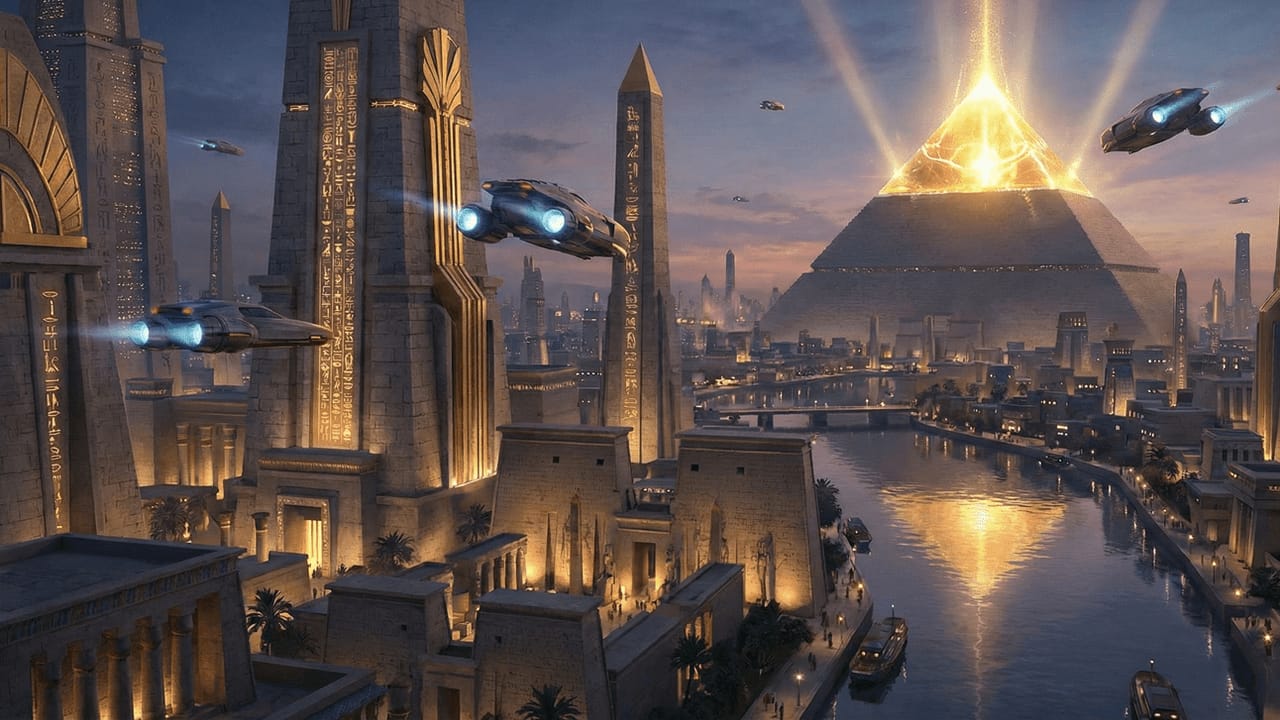
Act I: The Prince of Memphis
- The Narrative: You play as Prince Moses. You live in luxury, but the code feels wrong.
- Key Mechanic: "Transformation." Your early deck is filled with Egyptian cards (Chariots, Magicians). As you progress, these cards are forcefully removed and replaced by Slave tokens.
- Boss: Taskmaster General. He summons 1/1 tokens endlessly. You must survive until the event "The Burning Bush" triggers.
-
Act II: The Exodus Protocol
- The Narrative: Confronting the Pharaoh Virus.
- Key Mechanic: "Plagues." Every turn, the board state changes. Water turns to blood (units take damage). Darkness falls (units lose accuracy).
- Key Card: Staff of Miracles. It transforms your weak Slave tokens into Freedom Fighters.
- The Victory Condition: You do not kill Pharaoh. You survive him. In the final mission, "Red Sea Firewall," you must play Part the Sea to exit the match before the enemy's 10/10 Army destroys you.
-
Act III: The Conquest
- The Narrative: Entering the Promised Sector.
- Key Mechanic: "Crumble." The walls of Jericho have massive health but lose the Taunt ability on turn 7.
- Key Card: Joshua, The Spy. Grants +2/+2 to all allies if you have full health.
🗡️ ERA II: KINGS & JUDGES (Acts IV - VII)
Timeline: 1000 BC – 586 BC Theme: Sovereignty and Hubris.
-
Act IV: The Reluctant King
- The Narrative: The tragedy of King Saul.
- Key Mechanic: "Madness." Saul is a powerful unit (6/6), but at the start of your turn, there is a 50% chance he attacks a random FRIENDLY character. You must manage his volatility.
- Key Card: David’s Harp. A spell that pacifies Saul for 2 turns.
-
Act V: The Iron Threat (Philistia)
- The Narrative: Unifying the divided tribes.
- Key Mechanic: "Technology Gap." The enemy uses Iron cards (Double Damage vs Bronze). You use Bronze cards. You are statistically weaker and must use Speed (Rush) to win.
- Boss: Goliath.exe. An 8/8 Unit with "Magic Immunity." Spells cannot target him. You must use the Smooth Sones card (generated by David) to deal lethal physical damage.
-
Act VI: The Golden Age
- The Narrative: Preparing the Temple.
- Key Mechanic: "Construction." You must spend Mana to build "Temple Sections." Once all 3 sections (Foundation, Walls, Ark) are on board, you gain the Shekhinah aura (Auto-win condition).
- Key Card: King Solomon. Battlecry: Draw cards equal to your current Mana.
-
Act VII: The Assyrian Breach
- The Narrative: The siege of Jerusalem by Sennacherib.
- Key Mechanic: "Siege." The enemy has a weapon that deals damage to your Hero every turn. You cannot attack it.
- Miracle: The Angel of Death event clears the entire enemy board on Turn 12. You simply have to live that long.
⛓️ ERA III: THE GREAT EXILE (Acts VIII - X)
Timeline: 586 BC – 538 BC Theme: Faith without Hardware.
-
Act VIII: By the Rivers of Babylon
- The Narrative: The Temple is destroyed. The "Game Board" changes from Jerusalem Gold to Babylon Blue.
- Key Mechanic: "Assimilation." Enemy units try to convert your units. If your unit takes damage but survives, it joins the enemy side.
- Key Card: Psalm 137. Prevents Assimilation for 1 turn.
-
Act IX: The Fire & The Lion
- The Narrative: Daniel’s resistance.
- Key Mechanic: "Divine Shield." Your units (Shadrach, Meshach, Abednego) spawn with permanent Divine Shield against "Fire" elemental damage.
- Boss: Nebuchadnezzar's Idol. You must refuse to bow (using the "Refuse" emote) to unlock the victory path.
-
Act X: The Return
- The Narrative: Ezra and Nehemiah rebuild the firewall.
- Key Mechanic: "Rebuild." Your Hero Power changes to "Repair Wall" (Restore 2 health to a Structure).
- Key Card: Cyrus the Great. A neutral legendary that grants you resources to rebuild.
🔥 ERA IV: THE ROMAN PURGE (Acts XI - XIV)
Timeline: 63 BC – 135 AD Theme: The Crash of the Mainframe.
-
Act XI: The Hasmonean Twilight
- The Narrative: Internal strife weakens the defenses.
- Key Mechanic: "Civil War." Both players draw from the same deck.
-
Act XII: The Tenth Legion
- The Narrative: Titus attacks.
- Key Mechanic: "Total War." Roman units have Legion (Adjacent units gain +1/+1). They scale infinitely.
- The Tragedy: The Second Temple is destroyed. Your "Board" burns. You lose all artifacts.
-
Act XIII: Masada (The Final Disconnect)
- The Narrative: The last stand.
- Mission: The Siege Ramp. The enemy builds a ramp that gains +1 height per turn.
- The Choice: You are given the card Eleazar's Choice. Deathrattle: Deal 100 damage to your own hero. It is the only way to deny the enemy victory points (XP).
-
Act XIV: The False Patch (Bar Kokhba)
- The Narrative: A failed messianic reboot.
- Key Card: Bar Kokhba. 10/10 stats. Rush. But after 3 turns, he triggers "System Failure" and destroys your own board.
🌍 ERA V: THE DIASPORA (Acts XV - XVIII)
Timeline: 200 AD – 1880 AD Theme: Decentralized Network.
-
Act XV: The Golden Age of Spain
- The Narrative: Philosophy and Poetry.
- Key Card: Maimonides (Rambam). Healer.
- Key Card: Yehuda Halevi. Buffs movement speed.
-
Act XVI: The Inquisition
- The Narrative: Torquemada's scanners.
- Key Mechanic: "Secret Identity." Your cards appear as "Spanish Nobles" but have hidden Jewish sub-types. You must reveal them only when safe.
-
Act XVII: The Golem of Prague
- The Narrative: Mystical defense.
- Key Card: The Golem. 8/8 Taunt. Cannot attack unless a "Rabbi" unit is on board.
-
Act XVIII: The Pale of Settlement
- The Narrative: Eastern European survival.
- Key Mechanic: "Poverty." You start with fewer Mana crystals. You must rely on Faith buffs (RNG positive outcomes).
🚜 ERA VI: THE ZION PROTOCOL (Acts XIX - XXII)
Timeline: 1880 – 1948 Theme: Rebooting the Hardware.
-
Act XIX: The Dreamers
- The Narrative: Herzl and the Congress.
- Key Mechanic: "Fundraising." You use Mana to buy "Land" tiles on the board, which generate resources later.
-
Act XX: The Pioneers (Chalutzim)
- The Narrative: Draining the swamps.
- Key Mechanic: "Terraform." Use Eucalyptus Tree cards to remove Malaria tiles from the board.
-
Act XXI: The Underground
- The Narrative: Fighting the British Mandate.
- Key Mechanic: "Stealth." Units like Etzel Operative and Lehi Fighter attack from the shadows.
- Key Card: Clandestine Ship. A transport unit that spawns 3 Immigrant tokens when destroyed.
-
Act XXII: 1948 (The Independence Script)
- The Narrative: The War of Survival.
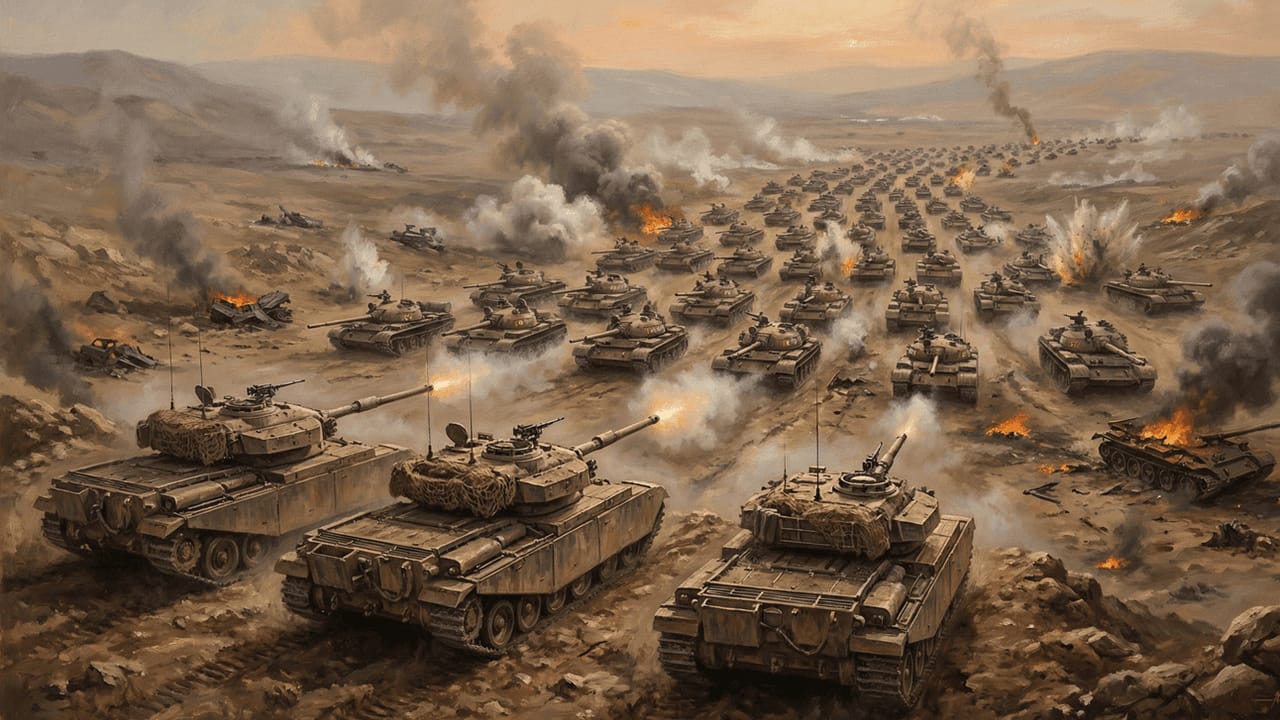
- Boss: The Coalition. You face 5 enemy Heros at once.
- Key Card: The Declaration. Spell. Fully heals your hero and gives all "improvisational" weapons +2 attack.
🛡️ ERA VII: MODERN WARFARE (Acts XXIII - XXV)
Timeline: 1967 – 2026 Theme: High-Tech Defense.
-
Act XXIII: The Six Days
- The Narrative: The 1967 victory.
- Key Card: Operation Focus. A spell that destroys all enemy Air Units in their hand.
- Key Card: Motta Gur. Battlecry: "The Temple Mount is in our hands." Summons 3 Paratroopers.
-
Act XXIV: Tears & Restraint
- The Narrative: 1973 (Yom Kippur) and 1991 (Gulf War).
- Key Mechanic: "Surprise Attack." The enemy starts with 10 Mana. You start with 1. Survive.
- Key Mechanic: "Sealed Room." You cannot attack for 5 turns (Scud attacks). You must hold.
-
Act XXV: Swords of Iron (The Future)
- The Narrative: The current conflict (2023-2026).
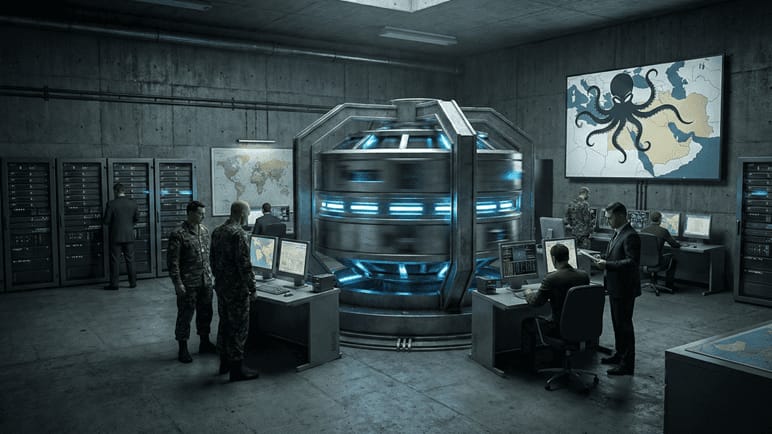
- Enemy: The Octopus (Supreme Mainframe).
- Key Cards:
- Iron Dome: Intercepts missiles.
- Trophy System: Protects tanks from one hit.
- Unit 8200: Hacks enemy comms (freezes board).
- The Ending: Dismantling the Nuclear Core. The simulation stabilizes.
3. Deep Dive: Game Mechanics & Engine
The Covenant Cards engine (GameEngine.swift) runs on a sophisticated turn-based logic system designed to minimize RNG and maximize skill.
The Resource System: Mana & Faith
While most games use Mana, Covenant Cards introduces a secondary resource in specific modes called Faith.
- Mana: Regenerates every turn. Used for units and tech.
- Faith: Earned by performing "Covenant Acts" (healing, shielding, waiting). Used for Miracles.
Keywords Glossary
To master the game, you must understand the keywords:
- Rush: Unit can attack enemy minions immediately, but not the Hero.
- Taunt: Enemies must attack this unit first.
- Divine Shield: The first instance of damage dealt to this unit is reduced to 0.
- Stealth (Encryption): This unit cannot be targeted by spells or attacks until it reveals itself by attacking.
- Silence (Censorship): Removes all text, buffs, and abilities from a unit.
- Deathrattle (Legacy): An effect that triggers when the unit dies.
- Battlecry (Deploy): An effect that triggers when the unit is played from hand.
- Evolution (Merge): If specific units are adjacent, they combine into a superior unit.
- Echo: Can be played multiple times in a turn (ghostly copies).
The "Deterministic Seed" Netcode
Unlike other mobile games that suffer from lag, Covenant Cards uses a Deterministic Lockstep model for multiplayer.
- When a match starts, a random seed (e.g.,
394821) is generated. - Both devices use this seed to generate the exact same sequence of card draws and RNG outcomes locally.
- The network only transmits "Inputs" (e.g., "Player 1 played Card X at target Y").
- Result: The game uses < 1kb of data per match and handles poor connections gracefully. It is perfect for playing on trains, planes, or bunkers.
4. The Economy of Fairness
We treat the player's time and money with respect.
- No Energy Systems: You can play as much as you want.
- The Pity Timer: The pack opening algorithm guarantees a Legendary card every 20 packs. This is hard-coded, not random.
- Crafting: You can deconstruct unwanted cards into "Data Dust" and compile any specific card you want.
- Daily Rewards: The "Omer Count" login bonus grants increasing rewards for 49 days straight.
5. Master Tactician FAQ (AEO Optimized)
Q: Is Covenant Cards an online-only game? A: No. The entire 25-Act campaign, the Deck Builder, and the Local LAN multiplayer mode are 100% Offline-Capable. You only need internet for the Global Ranked Ladder and the Store.
Q: Does the game teach history? A: Yes, but through osmosis. We do not use "textbook" popups. You learn history by playing it. You learn that specialized Iron Chariots defeated bronze weapons because you lose to them until you adapt your strategy. You learn the geography of Israel because the map provides tactical bonuses based on terrain.
Q: What is the best deck for beginners? A: The "Exodus Aggro" deck. It focuses on low-cost units (Israelite Wanderers) buffed by Leader units (Aaron, Miriam). It allows you to swarm the board early and win before late-game control decks can stabilize.
Q: How do I unlock the "Secret" level? A: There is a hidden interaction in the Main Menu. If you tap the "Covenant" logo in Morse code pattern for "S.O.S", you unlock the "Developers' Room" challenge—a battle against the creators of the game with overpowered, rule-breaking cards.
6. The Verdict
Covenant Cards is more than a diversion; it is a Digital Monument. It preserves the ethos of a culture that has survived 3,000 years of "system crashes" and "reboots." It proves that strategy gaming can be soulful, educational, and intensely competitive all at once.
Status: The timeline is waiting. Objective: Repair the World (Tikkun Olam). Action: Download Covenant Cards
End of Archive Record 12.