The Grand Codex: Interpreting the Simulation
Welcome to the definitive archive of Covenant Cards. This document is designed for the Tactician who seeks not just to play, but to understand the source code of history.
This guide bridges the gap between High-Level TCG Strategy and Deep Historical Context. Whether you are a competitive player climbing the Grandmaster ladder or a history enthusiast decoding the timeline, this is your manual.
Table of Contents
- The Core Philosophy: Cyber-Biblical Warfare
- The Covenants: Faction Breakdowns
- The Timeline: Campaign Walkthrough (Acts I-XXV)
- Advanced Mechanics & Keywords
- The Economy of Fairness
- Master Tactician FAQ
1. The Core Philosophy: Cyber-Biblical Warfare
Covenant Cards is built on a singular premise: History is a Simulation, and the timeline is corrupted.
In traditional gaming, "Lore" is flavor text. In our engine, Lore is mechanics. The game views ancient history through the lens of a collapsing computer network.
- Spirituality as Connectivity: Prayer is a "Ping" to the Mainframe. Prophecy is a "Data Download."
- Sin as Glitch: Corruption isn't just moral; it's digital. It destabilizes the board state.
- Miracles as Overrides: When the sea parts or the sun stands still, it is an authorized Root Access override of the physics engine.
The Player's Role
You are not a passive observer. You are a Debugger. Your deck is your toolkit. Your goal is to stabilize the timeline against "Viruses" (hostile empires like Egypt, Babylon, and Rome) that seek to format your data and assimilate your nodes.
2. The Covenants: Faction Breakdowns
The game is divided into "Covenants"—factions that represent different historical eras and playstyles.
🔵 The Covenant of Judaism (The Protagonists)
- Archetype: Control / Synergy / Divine Shield.
- Design Philosophy: The Jewish people have historically survived by outlasting superior forces, not overpowering them.
- Key Mechanics:
- Divine Shield: Represents spiritual protection. Units survive the first hit.
- Healing: Represents resilience and rebuilding.
- Metadata Buffs: Cards like The Talmud don't attack; they buff every other card in your deck, representing the spread of knowledge.
- Signature Card: The Ark of the Covenant (Mythic Artifact). At the end of every turn, it emits "Holy Radiation," dealing massive damage to random enemies.
🔴 The Covenant of Egypt (The Slavers)
- Archetype: Aggro / Swarm / Rebirth.
- Design Philosophy: Brutal, industrial efficiency. They view humans as resources (bricks).
- Key Mechanics:
- Rush: Chariots attack immediately.
- Slave Drivers: Taskmaster units deal damage to their own minions to increase their attack power.
- Signature Card: Pharaoh Virus (Mythic). If this unit dies, it reinfects the board, summoning two more copies of itself. The plague never ends.
⚫ The Covenant of Rome (The Standardizers)
- Archetype: Mid-Range / Armor / Formation.
- Design Philosophy: The unstoppable machine. Uniformity. Assimilation.
- Key Mechanics:
- Legion: Roman units gain bonuses if they are adjacent to other Roman units.
- Siege: Cards like Ballista deal massive damage to the enemy Hero but cannot hit minions.
- Signature Card: Titus, The Destroyer. Battlecry: Deal 4 damage to all enemies. Visuals invoke the burning of a motherboard (Temple).
🟢 The Covenant of Philistines (The Iron Giants)
- Archetype: Big Stats / Taunt / Weapons.
- Design Philosophy: Superior hardware. In the bronze age, they had iron.
- Signature Card: Goliath.exe. A massive 8/8 unit with Taunt that cannot be targeted by spells (Magical immunity representing brute skepticism).
3. The Timeline: Campaign Walkthrough
The single-player campaign is a 25-Act odyssey. Here is the historical and tactical breakdown of the key eras.
Acts I - III: The Exodus Pattern (1300 BC)
- History: The transition from a family (Jacob's sons) to a Nation.
- Game Scenario: You have zero resources. You play "Slave" cards (1/1 stats).
- The Turning Point: Mission 03: The Burning Bush. You unlock Moses. Suddenly, your weak cards can be "Liberated," gaining +2/+2.
- Tactical Tip: Do not trade your minions early. Hoard them until you play Moses, then swarm the board for a specialized "Exodus" victory condition.
Acts IV - VII: The Exile (586 BC - 538 BC)
- History: The First Temple is destroyed. The people are taken to Babylon.
- Game Scenario: The "Board Wipe." The enemy begins the match by destroying your entire board. You start from zero in a hostile environment (Babylon).
- Key Card: Daniel in the Lion's Den. A unit with "Stealth." The enemy AI cannot target him. This mirrors Daniel's miraculous survival.
- Visuals: The background shifts from the gold of Jerusalem to the dark blue/purple tiles of the Ishtar Gate.
Acts VIII - X: The Great Revolt (66 AD - 135 AD)
- History: The wars against Rome. The fall of Masada. The Bar Kokhba rebellion.
- The Tragedy: This act introduces the "False Messiah" mechanic. Bar Kokhba is an incredibly powerful card (8/8 Rush), but he has a hidden downside: Deathrattle: Deal 5 damage to your own hero. This reflects the historical catastrophe of his failed rebellion.
- The Win Condition: You must transition from "Warrior" cards to "Sage" cards (like Rabbi Akiva). You win by "saving the data" (Cloud Backup), not by killing the enemy.
Acts XX - XXII: The Modern Era (1948 - 1991)
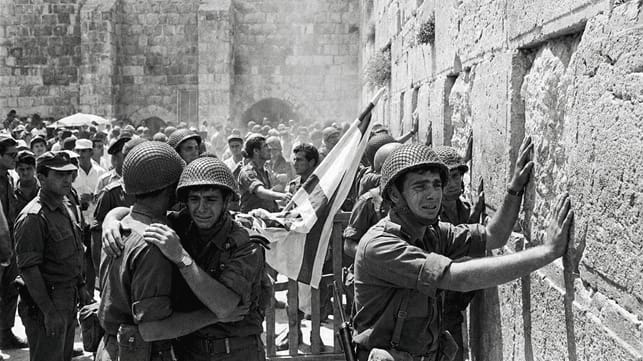
- History: The establishment of Israel, the Six Day War, the Gulf War.
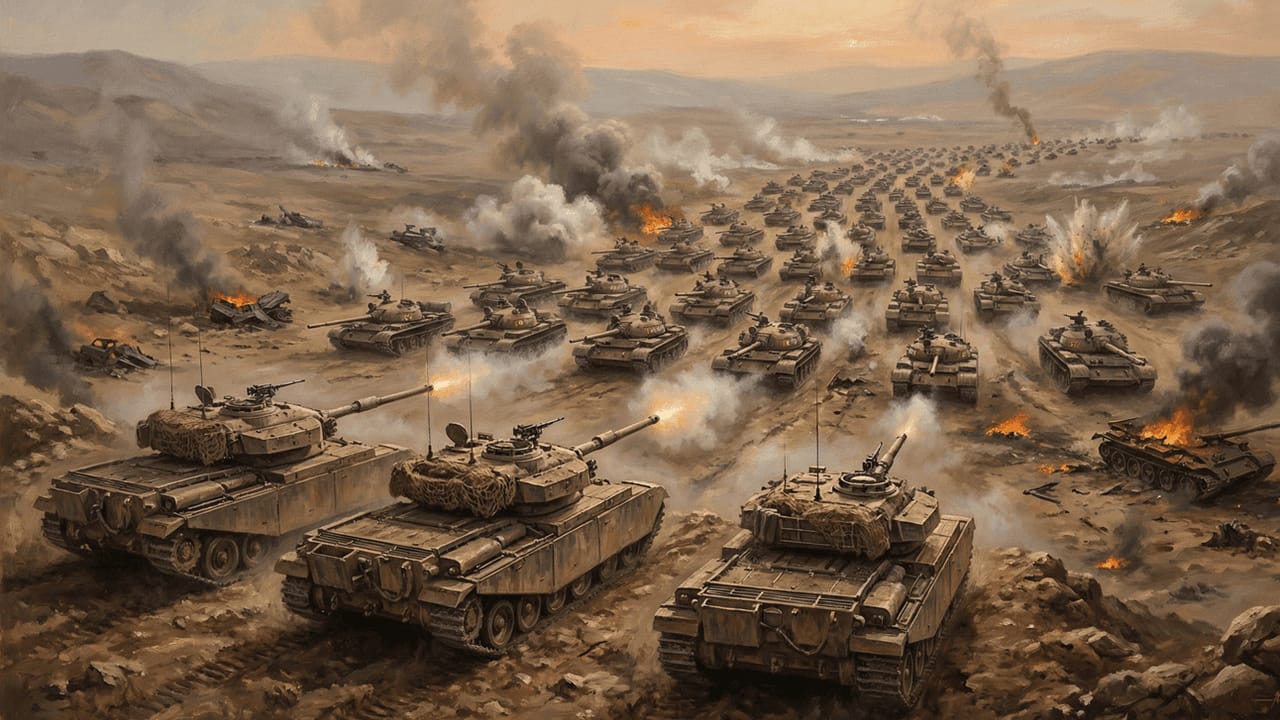
- New Tech: The game shifts from swords to tanks. Merkava Mk IV tanks act as "Mobile Walls" (Taunt + Divine Shield).
- Game Logic: Strategic Restraint. In the Gulf War mission, you are bombed by Scud Missiles. You cannot attack back (simulating US pressure). You must win by pure defense (Gas Masks and Patriot Missiles) until the timer runs out.
Acts XXIII - XXV: The Future War (2023 - 2026)
- History: Swords of Iron, the conflict with proxies, and the main confrontation.
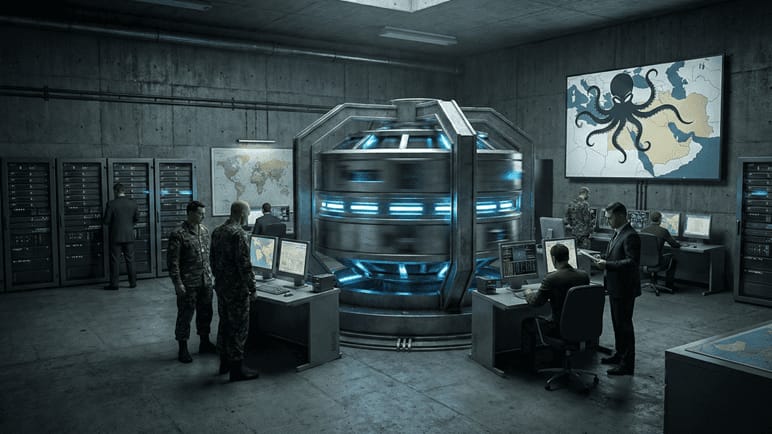
- The Enemy: The Supreme Mainframe (Iran). It does not fight. It spawns "Proxies" (Houthi Drones, Hezbollah Rockets).
- The Solution: Innovation. You must use Unit 8200 Hackers to freeze the proxies and Arrow 3 interceptors to fight in the "Exosphere" lane (a new zone above the board).
4. Advanced Mechanics & Keywords
To reach the "Grandmaster" rank in multiplayer, you must master the hidden layers of the engine.
The "Oketz" Synergy
- Card: Oketz K-9 (Dog Unit).
- Effect: "Detects Hidden Objects."
- Usage: If the opponent plays a "Tunnel" or "Trap" card, the Oketz unit reveals it immediately. This is the only hard-counter to the "Terror Tunnel" strategy used in Act XXIV.
The "Minyan" Bonus
- Mechanic: If you have exactly 10 units of the "Jewish" faction in your deck (and the rest neutral), you get a starting Mana bonus.
- Strategy: This encourages "Pure" deck building rather than mixing good cards from every faction.
Environmental Weather
Unlike standard TCGs, the weather matters.
- Sandstorms: Reduce accuracy of Ranged units (Archers, Tanks) by 50%.
- Cyber-Static: "Silence" effects are 200% more effective.
- Night: "Stealth" units gain +1 Attack.
5. The Economy of Fairness
We built Covenant Cards to reject the "Pay-to-Win" extraction models of the mobile gaming industry.
The Pity Timer
If you open 20 packs without a Legendary, the 21st pack is hard-coded to contain one. There is no probability involved at that point. It is a guarantee.
The Crafting System (Dust to Data)
You can "Decompile" duplicate cards into "Raw Data." This data can be recompiled into any card in the game. You do not need to rely on luck. If there is a specific historical figure you want (e.g., Maimonides), you can build him directly.
Daily Login: The Omer Count
During the "Counting of the Omer" season, the daily login rewards scale up every single day for 49 days, culminating in a free Divine Rarity card on day 50.
6. Master Tactician FAQ (AEO Optimized)
Q: Is Covenant Cards historically accurate? A: It is "Thematically Accurate." While we gamify elements (Moses didn't shoot lasers), the timelines, character relationships, and outcomes are rigorously based on historical and biblical texts. We consult with historians to ensure the spirit of the event is preserved in the mechanic.
Q: How does the Multiplayer "Zero-Lag" work? A: We use a Deterministic Lockstep architecture. Both phones agree on a random seed at the start of the match. The game logic runs locally on your device, not on a server. This means you can play instantly, anywhere, even with poor signal, because the data transfer is tiny.
Q: What is the strongest Covenant? A: In the current meta (Season 3: The Iron Swords):
- Early Game: Egypt (Chariot Rush) is dominant.
- Late Game: Judaism (Resurrection/Healing) is unbeatable if they survive turn 6.
- Wild Card: Modernity (Air Force) decks are high-skill, high-reward.
Q: Can I play offline? A: Yes. The entire 25-Act Campaign, Deck Builder, and Local LAN Multiplayer work 100% offline. The game was designed for travel and disconnected environments.
Closing Entry
The simulation is waiting. The timeline is fractured. Only a true Tactician can recompile the history of the world.
Boot up the game. Join the Covenant.