How to choose free chess lessons you can actually use
Begin with the first task you cannot explain: moving legally, escaping check, protecting a piece or finishing an endgame. Let that determine your next lesson.

Reading
Choose a starting topic with four questions
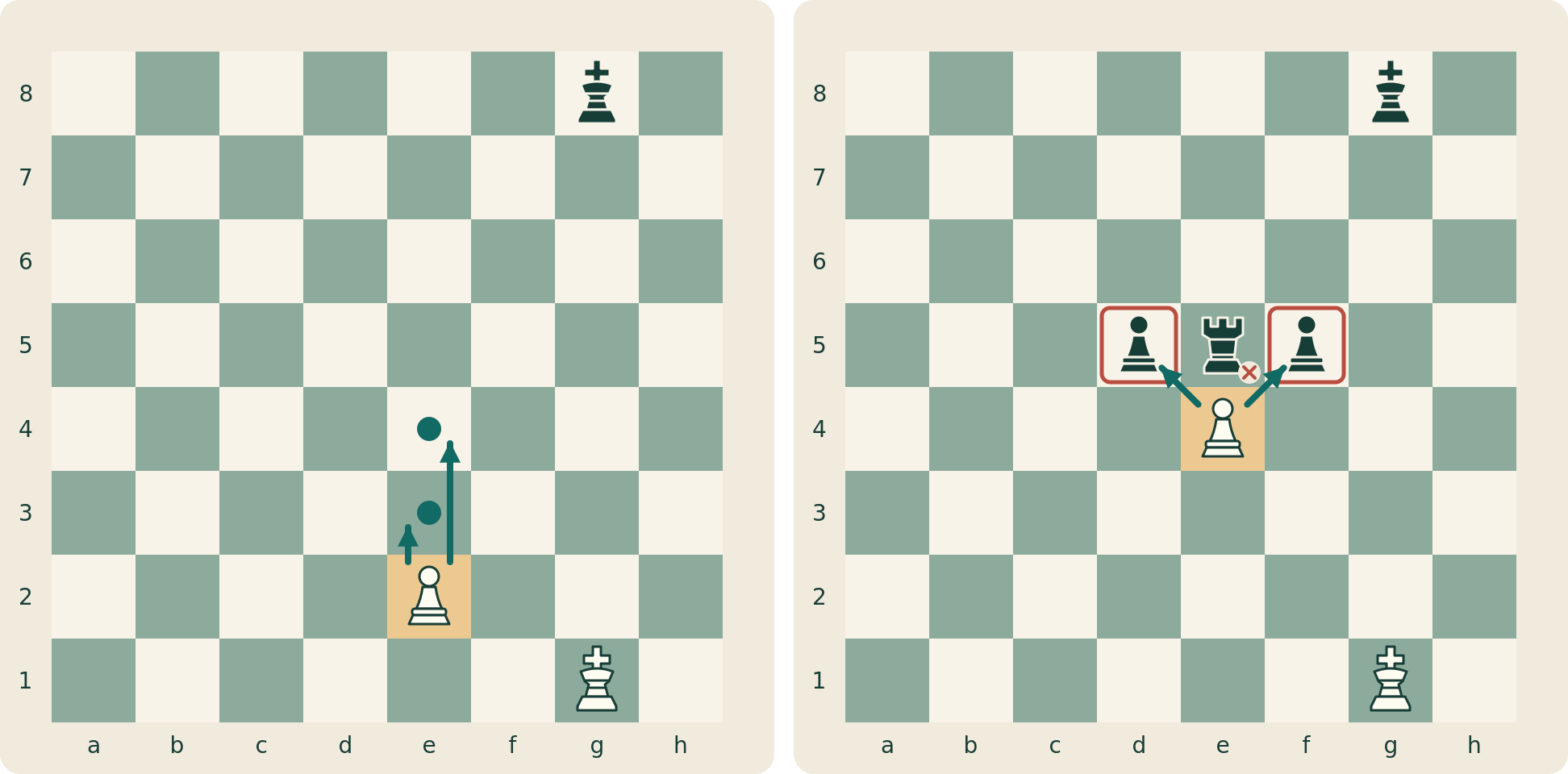
Try these questions on a board without hints. An uncertain answer identifies a starting topic; you do not need a rating to begin.
- Can I move every piece legally, including a pawn capture? If not, start with the board and piece movement.
- Can I explain why a king is in check and identify a legal response? If not, study check before opening systems.
- Can I distinguish checkmate from stalemate in a simple position? If not, work on the end of a game.
- Can I notice that a piece is attacked and describe how it is defended? If not, choose elementary threats, captures and tactics.
Choose a free-access model that fits your schedule
“Free” can mean an included course, a free introductory section or a daily allowance. Check the access rule before committing to a learning path.
Valorem makes Pawnpetal. Pawnpetal describes all 72 interactive lessons as free, alongside optional cosmetic purchases. Its Apple-device path is an option when you want guided examples and independent practice in the same app as local games.
Chess.com currently gives Basic members unlimited Learn to Play lessons and one additional lesson per day elsewhere; Premium removes the lesson limit. Lichess offers free Chess Basics and a Practice area with specific checkmate, tactical and endgame topics. These options are different ways to organize study, not evidence that one produces faster improvement.
For Android or a browser, consider Chess.com or Lichess. Check Pawnpetal’s official Apple listing for compatibility. A translated article does not prove matching app-language support.
Turn a lesson into an observable task
Set a finish line that names an action. “Understand tactics” is too broad. “Find both targets of a knight fork” is something you can check.
Attempt a position independently, then explain the opponent’s reply. If you miss it, identify the missing step: movement, an overlooked defender or stopping the calculation too soon.
Use three labels in your notes: not clear, can do with help, can do independently. A completion badge records progress through an activity; your explanation helps you choose what to revisit.

Build a sequence without guessing at advanced material
An early sequence could be movement, check, checkmate and stalemate, undefended pieces, tactical patterns, basic endgames and opening principles. This is a suggested order, not a universal curriculum.
Already know the rules? Start at the first weak point. A returning player might revisit castling. Someone who solves puzzles but misses threats during games may need deliberate board scanning rather than another opening course.
Change one topic at a time. If today’s task is recognizing a pin, finish with a question you can answer in another position before adding opening variations.
Check usability before choosing your main course
Try one lesson where you normally study. Check text size, piece clarity and language. For offline study, test with Wi-Fi and cellular data off; installation alone does not establish offline access.
For shared learning, take turns explaining instead of letting the stronger player supply every move. Agree when help is welcome.
Keep the resource that makes your next sensible lesson easy to find. Supplement it when useful, but avoid switching courses so often that you lose track of an unfinished idea.
Should I learn openings before tactics?
Learn enough opening principles to begin a game, but first make sure you can move legally, respond to check and notice attacked pieces. Let your current understanding determine the next lesson.
Does this guide require reviewing my old games?
No. It helps you choose a learning topic before you have game history. Once you have a game to examine, Valorem’s separate review guide explains how to turn one decision into practice.